Join the research
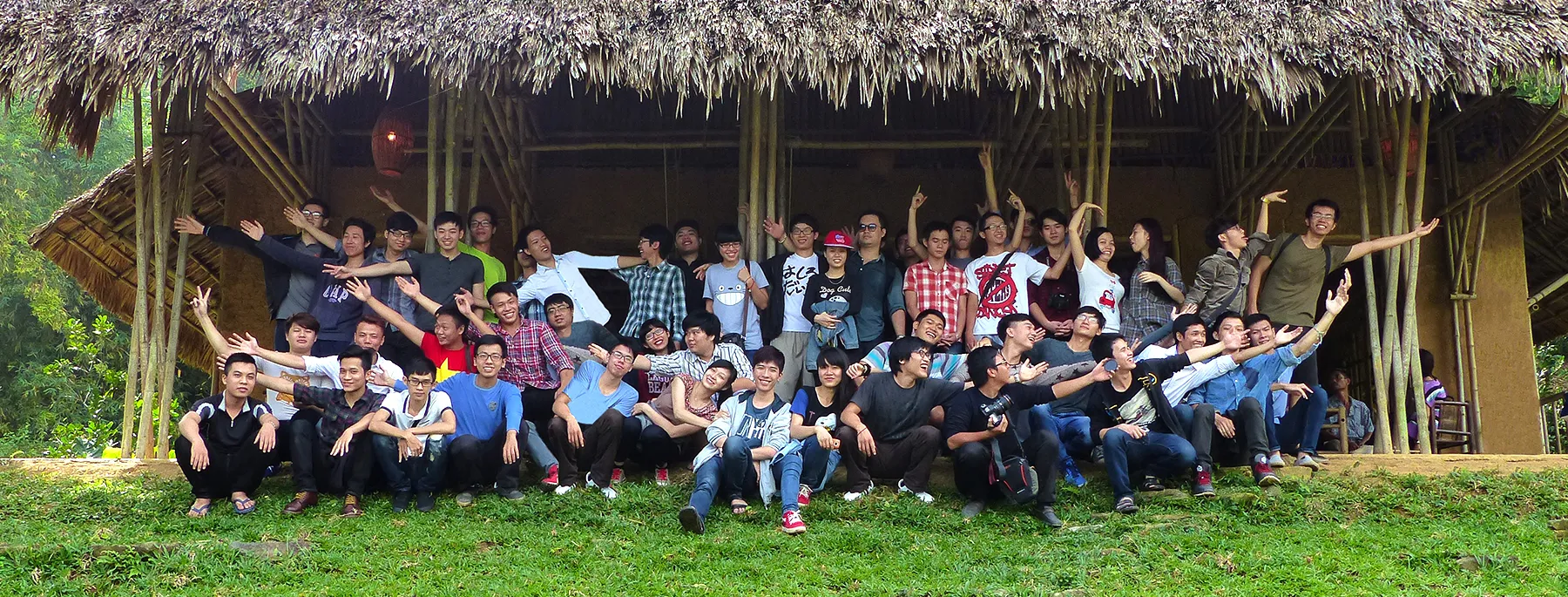
Join a community of students and experts dedicated to impactful research. We will connect you with experienced professionals to help you navigate your projects, exchange knowledge, and turn your research into a published success story.
Are you an expert or professional? Explore our pioneering research opportunities.
“If each person solves the small problems over which they have control, then the larger problems will disappear” [Confucius 551-479 BC].
For whom
Open to final-year thesis and PhD students of all disciplines related to Architecture, Engineering, Design, and Environmental Sciences.
Where
Explore this project at your own university or institute, with the support of your supervisor, and shape it to fit your curriculum and study plan.
Duration
The typical duration is one academic year, though it can be extended for PhD candidates.
Research assignments

2024
Preservation of stone masonry buildings: Benchmarking of modelling approaches for seismic assessment and international call to action.
2023
Non-engineered 2.0 - A call to action!
2021
Rubble stone masonry buildings with cement mortar: Base shear seismic demand comparison for selected countries worldwide.
2020
Non‐engineered 2.0 - Renewed philosophies for improving the seismic performance of non‐engineered construction.
2020
[1]
Rubble stone masonry buildings with cement mortar: Design specifications in seismic and masonry codes worldwide.
2019
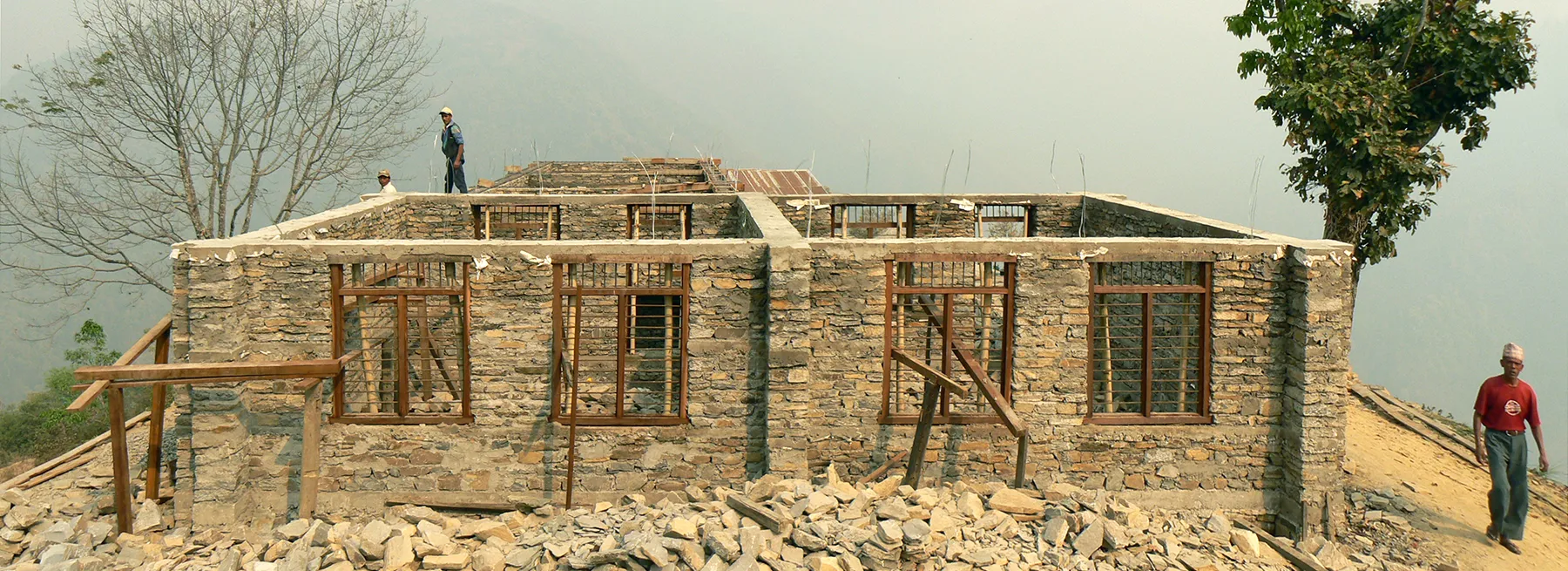
Cost analysis of mountain schools in Nepal: Comparison of earthquake resistant features in rubble stone masonry vs. concrete block masonry.
2019
[2]
School buildings in rubble stone masonry with cement mortar in seismic areas: Literature review of seismic codes, technical norms and practical manuals.
2009
Suitability of local soil for cost saving construction techniques in Kaski District of Nepal.
Other publications
Published work in collaboration with others.
Upadhyaya, Maurya, Singhal and Schildkamp
Nonlinear static and dynamic response of a random rubble stone masonry building with different configurations of seismic bands.
2024
Upadhyaya, Maurya, Singhal and Schildkamp
Performance analysis of a random rubble stone masonry building with different configurations of seismic bands.
2023
Abaev, Schildkamp, and Valiev
Base shear seismic demand comparison for buildings with natural stone walls in Nepal, Russia and Tajikistan [in Russian].
2022
Syrett, Cross, De Risi, De Luca, and Schildkamp
Comparison of pushover curves of a two-storey stone cement masonry building with and without additional concrete bands.
2022
Carabbio, Pieraccini, Silvestri, and Schildkamp
How can vernacular construction techniques sustain earthquakes: Bhatar buildings.
2018
Technical sheets
Safer construction
Improving the building quality
General recommendations to improve the overall building quality — How to choose correct materials, properly mix mortars and concretes, and make your building plumb, level, and square.
Seismic safety
Confined Masonry
Confined masonry has historically proven to behave well in earthquakes. The system behaves differently from a reinforced concrete frame. It is easier to build and cheaper to construct.
Understanding your soil
Low-tech soil testing
Learn about the basics of soil composition to determine its suitability for earth construction, such as building with cob, adobe, rammed earth, or stabilized blocks.
The Next-Gen
Twice a year, we host a free 4-day program for up to 50 engineering and architecture students worldwide. Join team challenges, expert-led sessions, and explore topics like green building, seismic design, and social architecture.